

Have you ever noticed how differently you can respond to the exact same situation depending on the state you were already in beforehand? You can reduce stress levels by just being aware of this, and while it can be hard to do in the moment, there’s a way to make it far less stressful.
It’s like when a message arrives from your manager, or someone makes a comment that normally wouldn’t bother you. On another day you may have handled it calmly, yet this time it suddenly feels overwhelming or personal.
Experiences like this often confuse people because the reaction can feel disproportionate to what is actually happening. We begin questioning ourselves and our thoughts become louder, harsher and more urgent. We may think we are failing, overreacting or not coping properly.
Sometimes we don’t even realise our nervous system was already under strain before the situation happened.
If you observe your own experience carefully enough, you start noticing something important. The mind doesn’t operate separately from the body and nervous system. The state of your nervous system changes the way thoughts are experienced, interpreted and believed.
When the nervous system is regulated, thoughts often feel manageable. There is more perspective, flexibility and emotional space around them. When the nervous system becomes overloaded, the exact same thoughts can suddenly feel intense, convincing and difficult to step away from.
It can help to think of the nervous system like the operating conditions of the mind.
This is often why people become confused by their own reactions. They judge themselves purely by the content of their thoughts without recognising the condition of the system those thoughts are arising within.
Psychiatrist Dan Siegel describes this through the idea of the “window of tolerance”. When we are within this window, we are generally able to think clearly, regulate emotions and respond with perspective. As stress accumulates and the nervous system becomes more activated, we can move outside that window into states of overwhelm, anxiety, irritability or shutdown.
In these moments, thoughts can become far more believable.
A passing concern suddenly feels catastrophic. A small mistake feels deeply personal. An unanswered message feels threatening. The mind starts searching for danger, certainty or control because the nervous system itself no longer feels safe or settled.
There isn’t anything wrong with you. Your nervous system is doing exactly what it’s meant to do, trying to keep you safe.
Your thoughts can sometimes work like a smoke alarm that has become too sensitive.
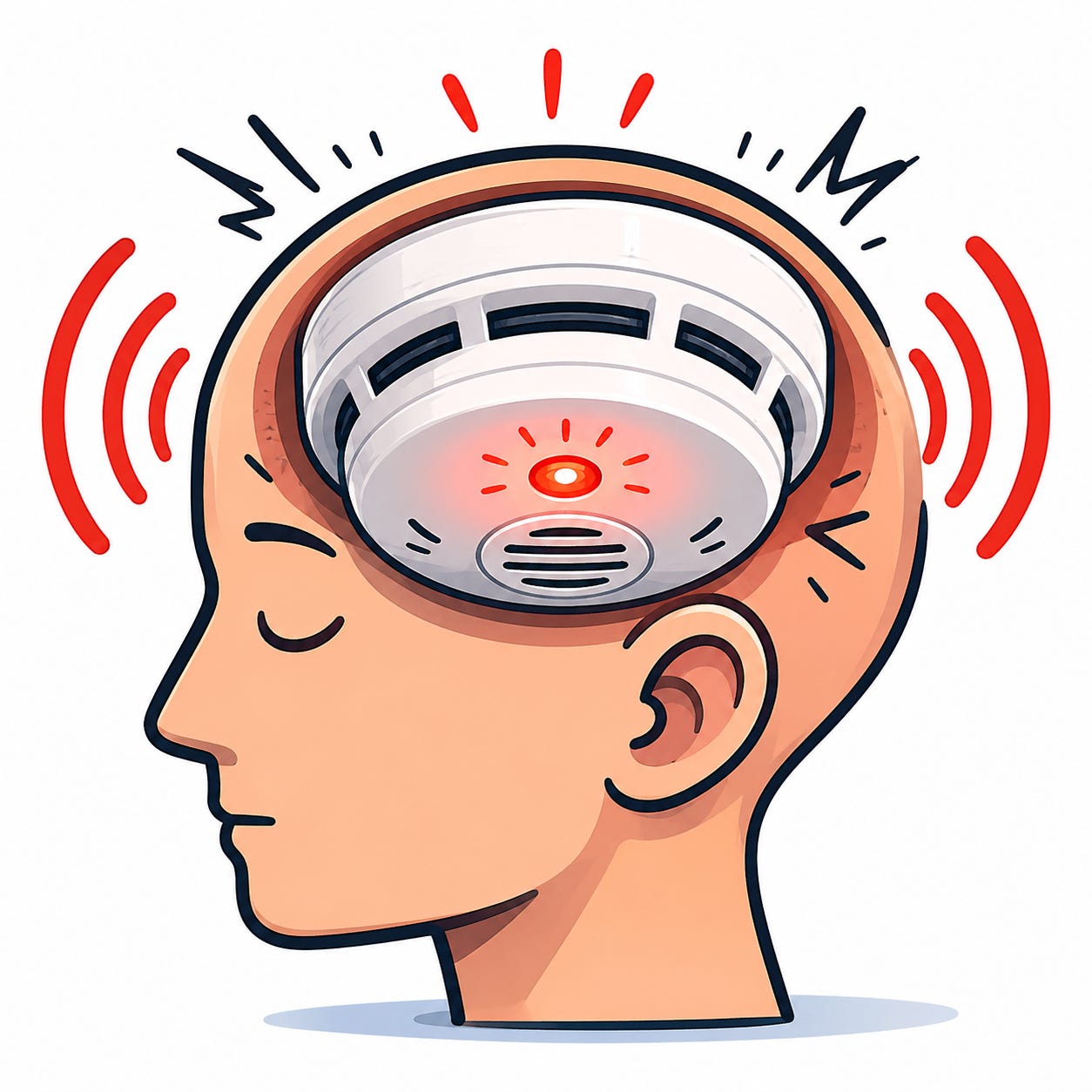
A smoke alarm is designed to protect you. When there is real danger, it activates quickly and loudly to get your attention. The problem is that over time, some alarms become so sensitive they start reacting to burnt toast, steam from the shower, or someone cooking dinner. The alarm still feels urgent and real, even when there is no actual fire.
Our minds and nervous systems can work in a very similar way.
After stress, pressure, uncertainty or difficult experiences, the brain can become highly alert to potential threats. A delayed email reply starts to feel like rejection. A small mistake at work feels catastrophic. A difficult conversation feels unsafe before it has even happened. Thoughts begin generating warnings and predictions, and the nervous system responds as though danger is present right now.
At that point, it is not just the thought creating the experience. The body is involved too. Heart rate increases, muscles tighten, breathing changes, and urgency takes over. This is why people often say, “I know I’m overthinking, but it still feels real.”
The important thing about this metaphor is recognising that the alarm itself is not the enemy. The alarm is trying to protect you. The real skill is learning to recognise when the system is accurately detecting danger and when it has simply become over-sensitive.
One practical way to work with this during the week is to pause and ask yourself:
“Is there an actual fire right now, or is my alarm reacting to a bit of harmless smoke?”
That small moment of awareness can create enough space to stop feeding the interference. It allows the nervous system to settle before making decisions, sending messages, reacting emotionally or spiralling further into thought.
Over time, this builds a different relationship with thinking. Thoughts can still appear, just like alarms can still sound, but they no longer automatically control your state or behaviour.
See if you can catch yourself next time this happens, even if it’s after the event. The more often you notice the alarm without immediately believing it, the more space you create between stress and reaction.