


Meet Narl.
Narl is the little tiny orange bird that’s been on your shoulder your entire life, and you may not have even noticed it as it’s really small. They fly onto your shoulder to let you know if there’s danger around. They’re constantly scouring for signs of danger to alert you to. They also helpfully remind you when you’re hungry, when you’re thirsty, and when a report you’ve been asked to do is due.
Some of Narl’s comments are helpful, but unfortunately they also repeatedly tell you things over and over again that you already know, along with a whole load of other things you don’t need to know. They ask you questions about yourself, about people at work, and criticise you for not getting something right. Sometimes Narl can just be distracting with random comments about things which have no relevance.
Narl is your thoughts. Every time Narl flies onto your shoulder to tell you something, that’s a thought popping into your head.
The good news is that there is a way to stop being run by your thoughts, and disengage from the endless stream of Narl’s chirping.
Notice the thought.
Accept that it’s there, don’t resist it.
Release the thought.
Land back into whatever it is you were doing.
Know that you have the ability to notice Narl (the thought), accept that it’s there, and let it go, because most of the time you don’t need it. Then you can get back into whatever you were doing and engage with it more fully.
As I mentioned last week, on average you’ll have over 6,000 thoughts a day. So that’s 6,000 times Narl could be flying onto your shoulder to tell you something. They are mostly random thoughts that the brain is creating to try and keep you safe, just as autonomous as the brain telling you to breathe, eat and heal. Most of the time you’ve heard the thoughts before, and for the majority you don’t need to do anything with them at all. But Narl’s there, constantly chirping away in your ear.
Narl can even trigger stress responses and flood your body with cortisol and adrenaline that can make you feel like there’s a very real threat. That sort of response was incredibly helpful thousands of years ago when you would probably have been living off the land, and when danger could kill you instantly. Nowadays most risk isn’t going to kill you. And if there is a real situation where there’s a serious threat, say a truck swerves across the road toward you while you’re driving to work, you’ll deal with it. Narl is really helpful then, and may save your life. Your fight or flight response will kick in, and you’ll do what you can to keep yourself safe.
But most of the time Narl is just giving you thoughts you don’t really need. For a lot of people, they don’t even notice Narl is on their shoulder at all, and they end up living in a world run by their thoughts (run by Narl) and feel like they’re suffering. Other people can tell they’re having the thoughts but still can’t stop reacting to them, so Narl still ends up running their life and they feel like they’re struggling. Both of these are perfectly normal and are represented by the states of ‘Suffering’ and ‘Struggling’ in the Interference Window.
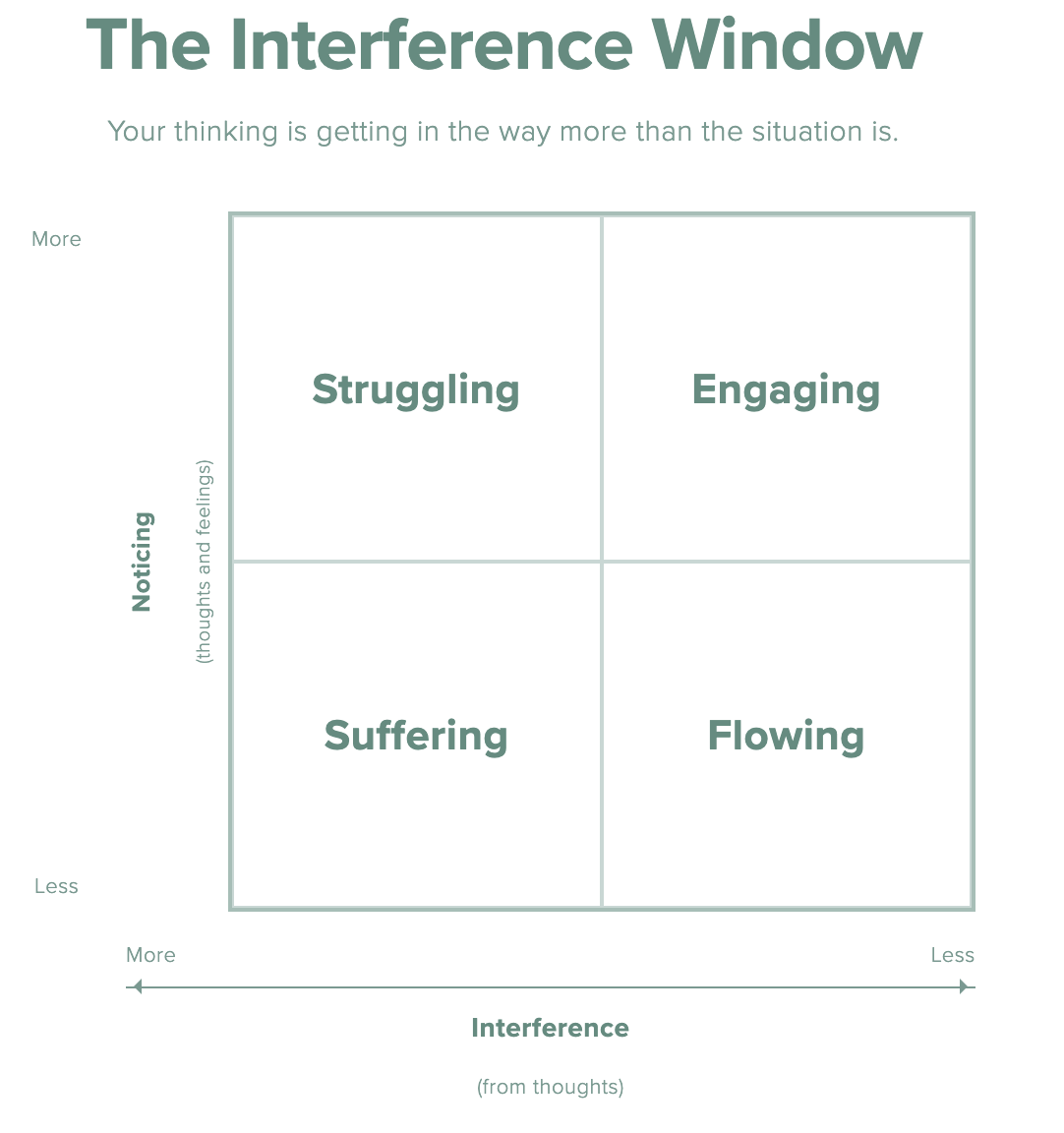
This is based on over 3,000 peer-reviewed Acceptance and Commitment Therapy studies over the past thirty years. Many showing that if you can notice a thought, accept that it’s there, and release it, it massively reduces the impact and interference it causes and lets you land back into your life and engage with whatever you’re doing.
In future posts, there’ll be more about Narl and how to notice and release your thoughts. This reduces the interference they cause, so you can engage more fully in life and whatever it is you’re doing.
But for now, keep an eye out for Narl today or tomorrow. See if you can notice a thought come, and maybe even picture a little orange bird sitting on your shoulder chirping away in your ear telling you the thought. They are there to try and help you but they’re probably just getting in the way.